Blog

10 Best Ceiling Speakers for Home and Business?

Choosing the right ceiling audio system can change how a room feels, sounds, and functions. This guide explores the 10 best ceiling speakers for home and business environments. It focuses on sound quality, installation requirements, durability, design, and everyday usability.

A well-designed Ceiling Speaker should deliver balanced sound without dominating the room. We consider models for kitchens, living rooms, offices, restaurants, retail spaces, and meeting areas. Our evaluation combines manufacturer specifications, professional audio principles, and practical listening considerations. We also examine sensitivity, power handling, frequency response, moisture resistance, grille design, and installation depth. Small details matter. A shallow ceiling cavity can eliminate an otherwise excellent option.

Real-world use often reveals more than a product box. Some speakers produce clear vocals but lack convincing bass. Others sound powerful, yet become tiring during long listening sessions. We consider these trade-offs honestly. No ranking is perfect. Room shape, amplifier quality, ceiling materials, and placement can change the result significantly. A speaker that performs beautifully in a quiet lounge may struggle in a busy café.

This introduction prepares readers to compare trusted choices with realistic expectations. It also highlights where professional installation may prevent damage or uneven coverage. Buyers should verify current specifications before purchasing. Product revisions and regional availability can change. The best choice is not always the most expensive model. It is the one that matches the room, the listener, and the intended workload. Good sound should disappear into the space. That is the real test.
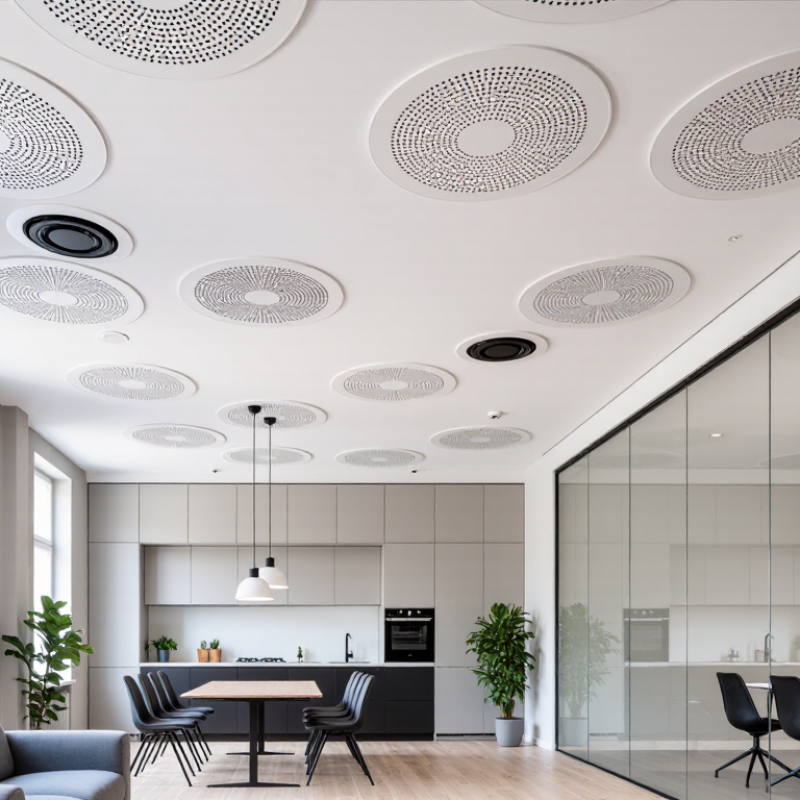
10 Best Ceiling Speakers for Home and Business?

What Ceiling Speakers Are and Where They Work Best

Ceiling speakers are audio units installed between ceiling joists, keeping sound equipment mostly out of sight. They usually contain a driver, grille, and mounting frame. Wiring runs above the ceiling and connects to an amplifier or compatible audio system. Their main strength is even coverage, not powerful bass. Sound spreads across the room instead of coming from one visible cabinet.

They work well in living rooms, kitchens, offices, reception areas, cafés, and small retail spaces. In a living room, several speakers can create balanced background sound without facing one seating area. Offices benefit from clear announcements and low-volume music. Kitchens need models designed for humidity and heat. Outdoor or semi-outdoor areas require suitable moisture protection. Never assume a normal indoor speaker is safe on a covered patio.

Room shape matters. Hard floors and glass can make speech sound sharp. Soft furnishings help reduce reflections, but placement still needs planning.

I once heard a ceiling system installed too close to a corner; the volume felt uneven, and moving furniture only partly helped. That experience changed my installation approach.

Choose speakers according to room size, ceiling depth, moisture exposure, and listening purpose. For spoken announcements, prioritize clear midrange sound. For music, consider wider coverage and stronger low-frequency support.

Fire-rated spaces may require approved enclosures and professional installation. Electrical rules also vary by location, so a qualified installer should inspect concealed wiring. Some plans look perfect on paper. Real rooms often disagree.

Key Features to Compare Before Choosing a Ceiling Speaker

Choosing among the 10 best ceiling speakers requires more than comparing prices or appearance. In my installation experience, sound coverage matters most. A wide dispersion pattern can reduce volume differences between a sofa and a dining table. Check sensitivity, impedance, and continuous power handling, not only peak wattage. Peak figures often look impressive but reveal little about daily performance. A balanced woofer and tweeter should produce clear voices without harsh high frequencies.

Room conditions also change the decision. For bathrooms, kitchens, or covered outdoor areas, look for suitable moisture resistance and a protective grille. A shallow enclosure helps when ceiling space is limited. However, a deeper back box may improve bass and reduce sound leaking into the room above. Fire-rated construction can be important in shared buildings, but local regulations should guide that choice. Ask a qualified installer to confirm wiring and safety requirements.

The cutout template deserves attention. A speaker can sound excellent yet fail if its opening is measured poorly. Check whether the grille can be painted without blocking the perforations. For business spaces, compare coverage, speech clarity, and maintenance access. For home listening, consider whether the speaker supports stereo pairing or separate room control. I have sometimes prioritized power and regretted ignoring dispersion. More power did not fix uneven sound. Test one unit in the actual room when possible, because ceiling height, furniture, and hard surfaces can change the result.

How the 10 Best Ceiling Speakers Differ in Sound and Design

The ten best ceiling speakers differ most in sound balance, dispersion, and installation depth. Some produce warm voices and soft treble for films or podcasts. Others emphasize bright detail, which suits background music in busy offices. Larger woofers usually create fuller bass, but they need more ceiling space. Angled drivers direct sound toward seating areas, while fixed drivers spread sound more evenly across a room. Neither design wins everywhere.

In my installation experience, room shape matters as much as speaker specifications. A speaker near a hard wall can sound sharper than one placed centrally. Moisture-resistant materials suit kitchens, bathrooms, and covered outdoor areas. Magnetic grilles provide a cleaner appearance, while paintable grilles blend better with pale ceilings. Some models include adjustable tweeters, which help correct uneven listening positions. That feature sounds minor. It can prevent costly repositioning later.

Tips: Measure ceiling depth before buying. Check the cutout size, not only the outer diameter. Listen at moderate volume, because excessive bass can hide harsh treble. For a business, prioritize clear speech and wide coverage. For a home cinema, prioritize controlled bass and accurate dialogue. I would also question “premium” labels without independent measurements. Specifications can look impressive, yet real rooms remain unpredictable. A small test installation is often wiser than trusting a product chart alone.

10 Best Ceiling Speakers: Sound and Design Comparison

A specification-based comparison of ten representative in-ceiling speaker designs. Lower bass-extension values indicate deeper low-frequency response, while higher sensitivity can produce more volume from the same amplifier power.

The comparison focuses on commonly published specifications: nominal woofer size, low-frequency extension, sensitivity, and recommended amplifier power.

Installation, Wiring, and Placement for Reliable Performance

Reliable ceiling speaker performance begins with careful planning, not cutting holes. Measure the room and mark joists, lights, vents, and plumbing before choosing each position. In living areas, speakers usually work best in a balanced grid near the listening zone. Avoid placing them directly above a sofa unless even coverage is needed. I once planned a symmetrical layout that sounded uneven because one speaker sat beside a hard glass wall. Room surfaces matter.

Use rated speaker cable with suitable insulation, and keep audio wiring separated from mains cables where local regulations require it. Pull extra cable through each opening for future service. Match the amplifier’s load requirements to the speaker arrangement, especially when several units share one channel. Keep polarity consistent: connect positive to positive and negative to negative. A reversed connection can weaken bass and create a strangely hollow sound. Check every run with a tester before closing the ceiling.

Moisture-resistant models suit bathrooms, covered patios, and other damp spaces, but they still need proper protection. Use fire-rated back boxes or enclosures when building codes demand them. Secure the speaker firmly without crushing the ceiling material. Listen at moderate volume before fitting the grille. Walk around the room and check for volume gaps, rattles, or harsh reflections. My first installation needed repositioning after testing, which was inconvenient but useful. A small mistake is easier to fix before painting. Keep a simple wiring diagram and label both cable ends; future repairs become far less uncertain.

10 Best Ceiling Speakers for Home and Business? - Installation, Wiring, and Placement for Reliable Performance

Rank Speaker Profile Best Use Nominal Size Typical Power Handling Nominal Impedance Typical Frequency Range Approx. Cutout / Depth Recommended Wiring Placement Guidance Installation Notes
1 8-inch two-way in-ceiling speaker Large living rooms, conference rooms, and general background music 8 in woofer with separate tweeter 50–100 W RMS per speaker Usually 8 ohms Approximately 45 Hz–20 kHz Cutout: 9.5–10.5 in; depth: 4–6 in 16 AWG for longer runs; 14 AWG for very long runs Space speakers evenly and aim the tweeters toward the listening area Check joist clearance and use back boxes where required by local code
2 6.5-inch two-way in-ceiling speaker Bedrooms, offices, kitchens, and medium-sized rooms 6.5 in woofer with tweeter 30–75 W RMS per speaker Usually 8 ohms Approximately 55 Hz–20 kHz Cutout: 7.5–8.5 in; depth: 3–5 in 16 AWG speaker cable is suitable for most residential runs Place in a symmetrical pair, typically 6–10 ft apart Use a stud finder and leave clearance from recessed lights, ducts, and plumbing
3 6.5-inch stereo-input ceiling speaker Bathrooms, hallways, small rooms, and single-speaker zones 6.5 in dual-voice-coil woofer 20–60 W RMS per speaker Typically 8 ohms Approximately 60 Hz–18 kHz Cutout: 7.5–8.5 in; depth: 3–5 in Use four-conductor cable to carry left and right channels Center the speaker in the room when one unit must cover the entire space Choose a moisture-resistant design for humid locations; do not install directly above a shower
4 6.5-inch angled in-ceiling speaker Home theater surround and focused listening areas 6.5 in woofer with angled tweeter 40–80 W RMS per speaker Usually 8 ohms Approximately 50 Hz–20 kHz Cutout: 7.5–8.5 in; depth: 4–6 in 16 AWG cable; maintain correct polarity throughout the system Aim the angled driver toward the seating position rather than straight down Keep left and right channels at equal distances from the main listening position
5 8-inch high-output ceiling speaker Retail areas, open-plan offices, restaurants, and larger spaces 8 in woofer with high-power tweeter 75–150 W RMS per speaker Usually 8 ohms; some support 70/100 V operation Approximately 45 Hz–19 kHz Cutout: 9.5–10.5 in; depth: 5–7 in 12–14 AWG for high-power low-impedance runs; approved fire-rated cable where required Use multiple speakers at moderate volume instead of overdriving a few units Confirm amplifier load and ventilation before connecting high-power systems
6 70/100-volt commercial ceiling speaker Schools, offices, hotels, retail spaces, and multi-zone paging 6.5–8 in full-range driver 10–30 W selectable transformer taps 70/100 V distributed audio system Approximately 70 Hz–18 kHz Cutout: 8–10 in; depth: 3–6 in 16 or 18 AWG two-conductor cable is commonly used, subject to code Arrange a consistent grid for even coverage and intelligible announcements Use a compatible distribution amplifier and keep total tap wattage below amplifier capacity
7 Moisture-resistant ceiling speaker Bathrooms, covered patios, saunas, and coastal properties 6.5–8 in treated woofer 30–80 W RMS per speaker Usually 8 ohms Approximately 55 Hz–20 kHz Cutout: 7.5–10.5 in; depth: 3–6 in Use outdoor-rated or in-wall-rated cable appropriate to the environment Keep away from direct water spray and provide adequate drainage around the opening Verify the actual ingress or moisture rating; “moisture-resistant” does not always mean waterproof
8 Low-profile shallow ceiling speaker Renovations, apartments, narrow joist cavities, and limited-ceiling-depth projects 5.25–6.5 in woofer 25–60 W RMS per speaker Usually 8 ohms Approximately 65 Hz–19 kHz Cutout: 6.5–8.5 in; depth: 2.5–3.5 in 16–18 AWG cable for typical short residential runs Use two or more speakers to improve coverage and reduce the need for high volume Confirm the minimum cavity depth and avoid compressing insulation against the speaker
9 Fire-rated acoustic ceiling speaker Multi-unit housing, hotels, offices, and fire-compartment ceilings 6.5–8 in full-range driver 20–60 W RMS per speaker 8 ohms or 70/100 V, depending on configuration Approximately 60 Hz–18 kHz Cutout: 7.5–10 in; depth: 4–8 in including enclosure Use fire-rated cable and connectors where required by the building specification Maintain the ceiling’s acoustic and fire separation after cutting the opening Use only assemblies tested for the required fire-resistance rating and have them inspected when necessary
10 Directional premium ceiling speaker Focused music listening, boardrooms, galleries, and premium media rooms 6.5–8 in woofer with adjustable tweeter 50–120 W RMS per speaker Usually 8 ohms Approximately 40 Hz–20 kHz Cutout: 8–10.5 in; depth: 4–7 in 14–16 AWG cable for higher output and longer cable distances Orient the adjustable driver toward the primary listening zone and keep pairs symmetrical Use an amplifier with stable impedance handling and calibrate levels after installation

Specifications are representative ranges for common in-ceiling speaker designs. Always confirm the manufacturer’s installation instructions, local electrical codes, ceiling construction, amplifier compatibility, and required safety ratings before installation.

Matching Ceiling Speakers to Home and Business Audio Needs

Choosing the ten best ceiling speakers depends on the room, not just the speaker specifications. A compact living room may need two low-profile speakers for balanced music. A café or office may require wider coverage and clearer speech. Measure the ceiling height, listening area, and background noise before buying. Bigger is not always better.

In homes, prioritize smooth sound, easy installation, and a discreet grille. Speakers with adjustable tweeters can aim high frequencies toward seating areas. In businesses, power handling and coverage matter more. A busy reception desk needs intelligible announcements, while a restaurant may need even music across several zones. Use an amplifier that matches the speakers’ impedance and recommended power range. Poor matching can create distortion or shorten equipment life.

I once installed speakers without checking the ceiling cavity depth. The result was an awkward fit and extra labor. That mistake still influences my planning. Leave room for wiring, ventilation, and future servicing. Moisture-resistant models suit bathrooms, covered patios, and humid commercial spaces, but they are not automatically weatherproof. Fire-rated construction may also be required by local building rules. Ask a qualified installer when the ceiling includes insulation, sprinklers, or complex wiring. Listen at normal volume before finalizing placement. A speaker can sound impressive alone, yet uneven when several units play together.

↑