Blog

Top Door Sign Types for Global Buyers

Choosing the right Door sign is a practical decision for global buyers, not merely a branding exercise. It affects navigation, accessibility, privacy, safety, and the visitor’s first impression. Grand View Research valued the global digital signage market at approximately USD 27.1 billion in 2022, with continued growth expected through 2030. This trend reflects stronger demand for flexible, visible communication across offices, hotels, hospitals, retail stores, and public buildings.

The best sign type depends on the location. A brushed-metal room plaque can suit a corporate corridor, while engraved plastic may perform better in schools or busy service areas. Acrylic signs offer clean visual appeal. Digital displays provide changeable information, but they require power, maintenance, and careful content control. MarketsandMarkets projects the digital signage market to grow from about USD 26.2 billion in 2023 to USD 43.4 billion by 2028. Still, digital is not always better.

Small details matter. Letter contrast, mounting height, viewing distance, surface finish, and cleaning routines influence daily performance. ISO 21542 and accessibility guidance from the International Code Council provide useful references, but local building requirements may differ. Buyers should confirm regional rules before ordering safety, emergency, or accessibility-related signs.

There is no universal winner. Material samples can reveal glare that photographs hide. Installation teams may also expose weak adhesive, unclear icons, or awkward placement. These lessons are easy to overlook. This guide compares major Door sign types, their applications, strengths, limitations, and purchasing considerations. The goal is a reliable shortlist, not a perfect answer for every building.
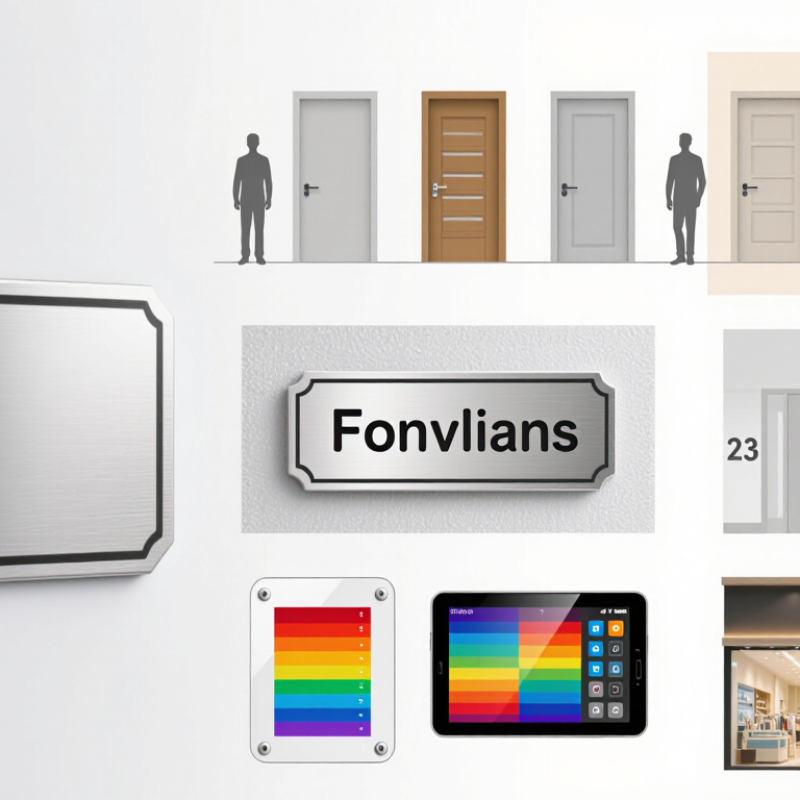
Top Door Sign Types for Global Buyers

Door Signs Explained: Purpose, Materials, and Common Applications

Door signs guide movement, identify rooms, and support safety and privacy. A clear room label prevents hesitation in busy offices, clinics, schools, hotels, and apartment buildings. Directional signs help visitors find elevators, restrooms, exits, and service areas. Tactile lettering and Braille can improve access, but buyers should confirm local accessibility requirements before ordering. Rules and mounting heights vary by region. Guessing creates costly rework.

Material choice depends on traffic, cleaning routines, moisture, and design goals. Acrylic offers a clean, modern surface for offices and reception areas. Aluminum suits corridors, public buildings, and locations needing stronger impact resistance. PVC provides a practical, lightweight option for temporary or budget-conscious projects. Wood and engraved laminate add warmth to hospitality interiors, yet porous finishes may need careful maintenance. Outdoor signs require UV-resistant printing, sealed edges, and corrosion-resistant fixings. Small details matter.

Adhesive may fail on dusty walls, while screws can damage some surfaces. A mock-up viewed from the actual doorway is worth the extra effort. A polished sign can still confuse people when contrast, wording, or placement is overlooked. Recheck the user’s viewpoint, not only the designer’s screen.

Main Types of Door Signs for Offices, Hotels, and Public Buildings

Door signs shape how people move through offices, hotels, and public buildings. In office corridors, room identification signs should show names, numbers, or functions clearly. Meeting-room signs may include availability panels, while department signs help visitors find the right team. Clarity comes first. A matte surface reduces glare near bright windows.

Hotels often need room-number signs, privacy indicators, and signs for housekeeping or service requests. Durable acrylic, metal, or sealed wood can withstand frequent cleaning and luggage contact. Room numbers should remain visible from several steps away. In practice, poor contrast can make an attractive sign difficult to read. That detail is easy to miss.

Public buildings require more inclusive sign systems. Directional door signs can identify restrooms, staff areas, elevators, classrooms, and emergency routes. Tactile lettering and Braille support visitors with limited vision, but placement and specifications vary by region. Buyers should check local accessibility requirements before ordering. Accessible signs are not merely decorative. They need consistent height, contrast, spacing, and mounting.

For international projects, consider language, climate, cleaning routines, and installation methods. A sign used beside a humid entrance needs stronger moisture resistance than one inside a dry office. Adhesive mounting looks clean, yet it may fail on dusty or textured walls. Screws are more reliable, although they leave visible fixing points. A small sample installation can reveal problems before a full order. Even experienced teams sometimes overlook viewing distance.

Top Door Sign Types for Global Buyers - Main Types of Door Signs for Offices, Hotels, and Public Buildings

Door Sign Type Typical Applications Core Information Common Materials Mounting Options Suitable Environment Key Buying Considerations
Room Identification Signs
Most widely used
Private offices, meeting rooms, classrooms, guest rooms, treatment rooms, and service areas. Room name, department, room number, occupant name, or room function. Aluminium, acrylic, PVC, wood veneer, engraved plastic, or laminated panels. Adhesive tape, concealed screws, standoffs, or slide-in mounting rails. Primarily indoor; selected metal and coated plastic versions can be used in sheltered outdoor areas. Check legibility, replaceable inserts, surface finish, cleaning resistance, and compatibility with the door material.
Directional Door Signs
Wayfinding
Corridors, entrances, elevators, stairwells, reception areas, and large public facilities. Destination names, arrows, floor information, department locations, or route instructions. Aluminium composite, acrylic, PVC, polycarbonate, or printed metal. Wall-mounted beside the door, perpendicular flag mounting, ceiling suspension, or adhesive fixing. Indoor and sheltered outdoor areas; weather-resistant finishes are recommended for exposed locations. Use high contrast, consistent arrows, readable viewing distance, and a layout that matches the building wayfinding system.
Tactile and Braille Accessibility Signs
Inclusive access
Accessible rooms, restrooms, elevators, staircases, exits, and public-service facilities. Raised room identifiers, tactile symbols, Braille text, floor numbers, or accessibility information. Engraved acrylic, rigid plastic, aluminium, photopolymer, or other durable tactile substrates. Permanent adhesive, mechanical fasteners, or concealed screws near the latch side of the door or adjacent wall. Indoor and controlled outdoor locations, depending on material and protective coating. Confirm the destination country’s accessibility requirements, tactile contrast, Braille format, mounting height, and clear floor space.
Restroom and Facility Signs
High traffic
Toilets, shower rooms, changing rooms, family facilities, nursing rooms, and staff facilities. Facility name, gender-neutral or gender-specific symbols, accessibility symbols, and occupancy information. Stainless steel, aluminium, acrylic, compact laminate, PVC, or ceramic-style panels. Adhesive, screws, anti-tamper fasteners, or flush mounting. Moisture-prone indoor areas and sheltered exterior locations. Prioritize moisture resistance, vandal resistance, easy cleaning, slip-resistant edges, and universally recognizable symbols.
Fire Exit and Safety Signs
Code sensitive
Emergency exits, fire doors, evacuation routes, fire equipment rooms, and restricted emergency access points. Exit wording, directional arrows, fire door instructions, hazard warnings, or emergency symbols. Photoluminescent plastic, aluminium, rigid PVC, or coated metal with high-visibility graphics. Adhesive, screws, rivets, or framed mounting, depending on the surface and location. Indoor and outdoor emergency routes when the selected material has suitable weather and temperature resistance. Verify local fire and safety regulations, viewing distance, photoluminescence requirements, symbol standards, and installation position.
Door Number and Room Number Signs
Property management
Hotels, hospitals, apartments, dormitories, offices, classrooms, and storage rooms. Room numbers, floor numbers, building zones, or sequential identification codes. Aluminium, acrylic, engraved plastic, wood-based panels, or printed laminate. Adhesive, screws, slide-in holders, standoffs, or door-mounted clips. Indoor environments; coated metal and UV-resistant plastics are suitable for exposed locations. Consider numbering consistency, replacement convenience, contrast, viewing angle, and alignment across multiple floors.
Reserved, Occupancy, and Status Signs
Changeable information
Meeting rooms, executive offices, hotel rooms, examination rooms, service counters, and shared workspaces. Reserved status, available/occupied status, appointment information, or temporary instructions. Aluminium, acrylic, polycarbonate, laminated card holders, or dry-erase surfaces. Slide-in frame, rotating panel, magnetic fixing, rail system, or adhesive. Indoor use, especially locations where information changes frequently. Evaluate update speed, insert replacement cost, privacy of displayed information, moving-part durability, and cleaning method.
Nameplates and Department Signs
Professional identification
Office doors, reception rooms, manager offices, laboratories, staff areas, and institutional buildings. Person’s name, job title, department, room function, or organizational unit. Brushed aluminium, acrylic, wood veneer, engraved plastic, or laminated composite. Adhesive, screws, magnetic backing, standoffs, or interchangeable holders. Mostly indoor; choose UV-stable finishes for bright entrances or semi-outdoor areas. Check privacy needs, name-change frequency, insert system, finish consistency, and compatibility with corporate or architectural standards.
Security and Access-Control Signs
Operational control
Restricted rooms, server rooms, electrical rooms, staff-only entrances, laboratories, and controlled-access zones. Authorized personnel only, access instructions, visitor procedures, security warnings, or equipment-room identification. Aluminium, stainless steel, rigid PVC, polycarbonate, or laminated safety-grade panels. Screws, rivets, security fasteners, adhesive, or mounting integrated with access-control hardware. Indoor, industrial, and sheltered outdoor environments, subject to material selection. Use clear wording, strong contrast, tamper-resistant fixing, chemical resistance where needed, and alignment with site security procedures.

Buyer note: Sign dimensions, colors, symbols, tactile details, mounting heights, fire markings, and accessibility features should be checked against the building codes and standards applicable in the destination market.

Choosing Door Signs by Visibility, Durability, and Installation Method

Top Door Sign Types for Global Buyers

Choosing Door Signs by Visibility, Durability, and Installation Method

A good door sign should be readable before visitors reach the entrance. High contrast, clear lettering, and a matte surface reduce glare in bright hallways. Consider viewing distance, corridor lighting, and reader height. A sign that looks excellent online may feel too small on a real door. I have learned to test full-size samples under morning and evening lighting.

Durability depends on the environment. Indoor signs may need resistance to fingerprints and frequent cleaning. Outdoor signs face rain, sunlight, dust, and temperature changes. Choose sealed edges and materials suited to local conditions. For coastal areas, corrosion-resistant fixings matter. Engraved or raised details can remain useful after printed graphics fade. Still, no material is perfect. Poor cleaning products can damage even a strong surface.

Tips: Match installation to the door. Adhesive mounting is quick and avoids drilling, but it needs a clean, dry surface. Screws provide stronger security for heavy signs, although they leave holes. Magnetic mounting works well on compatible metal doors and supports easy replacement. Before ordering, check door material, available space, wall clearance, and local accessibility requirements. Ask for a physical proof when color, texture, or lettering size affects recognition. Small details matter.

Accessibility, Safety, and Regulatory Features in Door Sign Design

Global buyers often choose room signs, directional signs, tactile signs, and safety signs for different building needs. Each type should support quick recognition, especially during stress or low visibility. High-contrast lettering helps people with limited vision. Tactile characters and Braille support users who cannot rely on sight. Keep it clear.

A practical door sign uses readable text, simple icons, and a matte surface that limits glare. Raised lettering should feel distinct without sharp edges. Mounting height and sign position also matter for wheelchair users and children. For washrooms, accessible rooms, and emergency exits, symbols should match local expectations. Translated text may help, but crowded signs can become harder to understand.

Safety and regulatory details require careful checking. Fire-rated doors may need signs that resist heat, smoke, or moisture, depending on the building and location. Photoluminescent markings can improve visibility during power loss. However, they should not replace emergency lighting or evacuation planning. Local accessibility codes, fire regulations, language rules, and building standards can differ widely. Buyers should request material data, durability testing, and installation guidance from qualified suppliers. A sign may meet one requirement yet fail in daily use. During site reviews, I have seen glare, poor contrast, and blocked sightlines reduce its value. Small design flaws matter. Door signs should be tested in the actual corridor, not only approved on paper.

Global Buyer Checklist for Sourcing and Customizing Door Signs

Global buyers comparing door signs should begin with the building’s purpose, not appearance. Office plaques, room-number signs, restroom signs, directional plates, and tactile signs serve different users. In sourcing projects, I check viewing distance, wall material, indoor exposure, and cleaning routines. Small details matter. A glossy plate may look refined but reveal fingerprints quickly. For outdoor doors, UV-resistant finishes and sealed edges usually outperform decorative coatings. Request material samples, color references, and close-up photos before approving production.

A practical buyer checklist should include dimensions, languages, symbols, contrast, mounting methods, and packaging. Accessibility requirements vary by location, so confirm local specifications with a qualified professional. Do not assume one layout fits every market. Tactile lettering, braille placement, and readable type sizes need careful review. Ask whether adhesive, screws, or concealed mounts suit the door surface. Also verify lead times, replacement policies, inspection steps, and carton protection. A low unit price can become expensive after damaged deliveries.

Customization works best through a controlled proofing process. Send exact text, translation files, logo-free artwork, colors, hole positions, and installation photos. Check every character. One overlooked accent can create confusion. I once focused too heavily on finish quality and missed an awkward mounting height. That mistake was small, but useful. Buyers should request a physical prototype when the order is large or the sign has unusual materials. Final inspection should examine edges, print alignment, surface scratches, legibility, and consistency across the batch.

Article Source:

↑