China Best 5 Axis CNC Mill Manufacturer?
Choosing the China best 5 axis CNC mill manufacturer requires more than comparing prices, photographs, or impressive production claims. A reliable supplier must prove accuracy under real cutting conditions. Look for inspection reports, machine testing records, spindle specifications, control-system options, and documented customer support. The best evaluation begins with your parts, materials, tolerances, and production volume.
Peter Zelinski, an experienced manufacturing journalist and former editor-in-chief of Modern Machine Shop, has observed, “Five-axis machining changes the way manufacturers think about part design, programming, and process control.” This idea matters when comparing a 5 axis CNC mill from different Chinese manufacturers. A capable builder should explain how simultaneous motion, tool-center-point control, thermal compensation, and collision avoidance affect your work. Ask for cutting demonstrations using comparable steel, aluminum, titanium, or difficult geometries. Small details matter. Watch the surface finish. Check the tool marks. Review the measured results.
Experience also exposes uncomfortable gaps. A clean showroom does not guarantee stable production. A low quotation may hide limited training, weak spare-parts planning, or unclear warranty terms. No factory is perfect. Even strong manufacturers may struggle with complex post-processors or overseas service response times. That deserves honest discussion.
This guide compares China’s leading 5 axis CNC mill manufacturers through practical criteria, including engineering capability, machine rigidity, software integration, quality certification, export experience, and after-sales reliability. Evidence matters more than confident language. Buyers should still verify references, inspect sample parts, and confirm every technical promise in writing before placing an order.
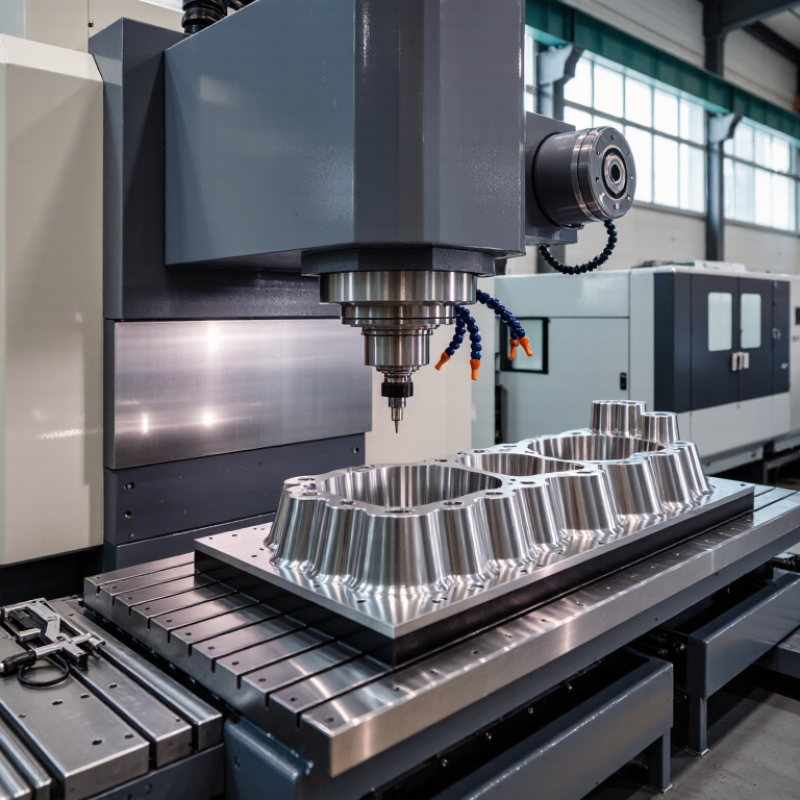
Define 5-Axis CNC Milling: 3 Linear Axes Plus 2 Rotary Axes
A five-axis CNC mill combines three linear axes with two rotary axes. The linear axes move along X, Y, and Z. The rotary axes tilt or rotate the workpiece, spindle, or both. This arrangement can reach angled surfaces in fewer setups. It is useful for turbine blades, medical components, molds, and complex aluminum parts.
In practical machining, the two rotary axes are often called A, B, or C axes. Their names depend on the rotation direction. A skilled manufacturer should explain axis travel, positioning accuracy, repeatability, and control software clearly. Ask for inspection records and sample parts, not only attractive specifications. A machine may offer five axes but still perform poorly under heavy cutting. That difference matters. I have found that fixture design, tool length, and chip removal often affect results more than advertised axis count. This deserves careful review.
Tips: Check simultaneous five-axis performance, not only three-plus-two positioning. Request a trial cut with your material and geometry. Confirm the working envelope after table rotation. Review service response, training, calibration procedures, and spare-parts availability. Small details matter. Also, leave room for doubt: a perfect brochure cannot replace verified test data.
China Best 5-Axis CNC Mill Manufacturer? — Define 5-Axis CNC Milling
A 5-axis CNC milling machine combines three linear axes—X, Y, and Z—with two rotary axes. The linear axes control straight-line movement, while the rotary axes tilt or rotate the workpiece or cutting tool, allowing access to multiple faces in a single setup.
Assess Accuracy Using ISO 230-2 Positioning and Repeatability Data
China Best 5 Axis CNC Mill Manufacturer?
Accuracy claims mean little without a traceable ISO 230-2 test. This standard evaluates positioning accuracy and repeatability across defined travel points. A serious manufacturer should provide test conditions, axis direction, temperature, probe uncertainty, and compensation status. Ask for the measured A and R values, not only “high precision.” A 2024 metrology review by the National Institute of Standards and Technology stresses that measurement uncertainty must accompany dimensional results. Without it, a 4-micrometre figure may sound better than it really is.
Inspect each linear and rotary axis separately. Then examine simultaneous five-axis motion. For example, a report showing 0.006 mm positioning error and 0.003 mm repeatability on a linear axis is useful only with its travel length and temperature history. ISO 230-2 does not create one universal pass limit. Your tolerance, material, tool length, and production cycle determine suitability. The International Organization for Standardization also recommends defined environmental conditions, because thermal drift can distort results. A cold morning test may flatter a machine.
Request raw tables, bidirectional results, and a retest after several hours. Short tests can hide growth near the spindle. I would also compare rotary-axis results in arc-seconds, then verify a real impeller or turbine-style part. Perfect paperwork is not enough. One weakness remains: many reports omit cutting-force effects. That omission deserves questions before purchase.
Compare China Suppliers by Spindle Speed, Torque, Travel, and Payload
China’s best 5-axis CNC mill depends on the workpiece, not the catalog headline. A 2024 Grand View Research analysis values the global CNC machine market at roughly US$88 billion in 2023. It also forecasts strong growth through 2030. That growth creates more choices, but specifications still require careful verification.
For aluminum and aerospace-style parts, compare spindle speed and torque together. Supplier catalogs commonly show 12,000–20,000 rpm and 15–30 kW. High speed helps small cutters, while torque supports heavy roughing. A 12,000 rpm spindle with 200 Nm torque may outperform a faster unit during steel cutting. Check the torque curve, not only the peak number. Peak torque can be brief.
Travel should match the fixture and tool angle. Typical Chinese 5-axis mills offer about 500–800 mm in X, 400–600 mm in Y, and 400–500 mm in Z. Payload often ranges from 300 to 800 kg. These figures need context. Rotary-table capacity may fall when the table tilts, and usable travel can shrink near collision zones. ISO 10791 machining-center tests and ISO 230-2 accuracy tests provide stronger evidence than brochures. Request test reports, thermal data, and a sample cut. I would also question optimistic cycle-time claims. They rarely include tool changes, probing, or workholding.
Verify Quality Through ISO 9001, CE Compliance, and Factory Audits
China Best 5 Axis CNC Mill Manufacturer?
Choosing a five-axis CNC mill requires more than comparing spindle speed and brochure photos. Quality becomes clearer through ISO 9001 records, CE compliance, and a detailed factory audit. An ISO 9001 certificate should show the company’s legal scope, issuing body, and validity date. Ask to review corrective-action records, not only polished certificates.
CE compliance also deserves careful checking. It should match the machine configuration, electrical system, safety guarding, and user documentation. A responsible manufacturer can explain risk assessment, emergency-stop testing, and conformity documentation in practical terms. Vague answers are warning signs. So are missing serial numbers.
A factory audit should follow the machine’s actual production path. Inspect incoming steel, component storage, machining areas, assembly benches, and final testing. Look for calibration labels on measuring tools. Check whether operators record backlash, positioning accuracy, and spindle runout. Ask how nonconforming parts are isolated. Small details matter.
No audit removes every risk. A clean certificate file can still hide weak process control. I would request sample inspection reports and speak with the quality manager. Video tours help, but they cannot replace physical verification. Even experienced buyers can overlook documentation gaps when delivery pressure rises. That is worth admitting. A reliable supplier welcomes specific questions and provides consistent evidence across documents, production, and testing.