Blog
How to Choose the Best Vertical Pair Twisting Machine
Choosing the right Vertical Pair Twisting Machine is a production decision, not a simple equipment purchase. It affects conductor balance, insulation safety, line speed, maintenance time, and final cable quality. A machine may look efficient in a brochure but perform poorly with your actual conductor sizes.
Industry demand makes this choice more important. The International Energy Agency’s Electricity 2024 report projects continued growth in global electricity consumption, increasing pressure on cable manufacturers and supply chains. Grand View Research also identifies expanding infrastructure, telecommunications, and power applications as major drivers for the global wire and cable market. These trends do not prove that one machine fits every factory. They show why careful selection matters.
Start with the product specification. Check conductor diameter, pair pitch, insulation material, required twisting speed, tension control, and acceptable rejection rates. Ask for measured samples, not only promises. During factory evaluations, observe how operators load reels, adjust guides, and remove damaged pairs. Small details matter. A vibrating guide can create uneven pitch within hours.
The best Vertical Pair Twisting Machine should match your real production conditions, including workshop space, power supply, noise limits, and maintenance skills. Review technical documents from recognized manufacturers, and compare them with quality guidance from organizations such as the International Electrotechnical Commission. No checklist is perfect. I have seen purchasing teams focus on maximum speed while overlooking changeover time and spare-part availability. That mistake can quietly increase operating costs.
This guide explains the practical criteria behind a reliable decision, from machine structure and control systems to total ownership cost.
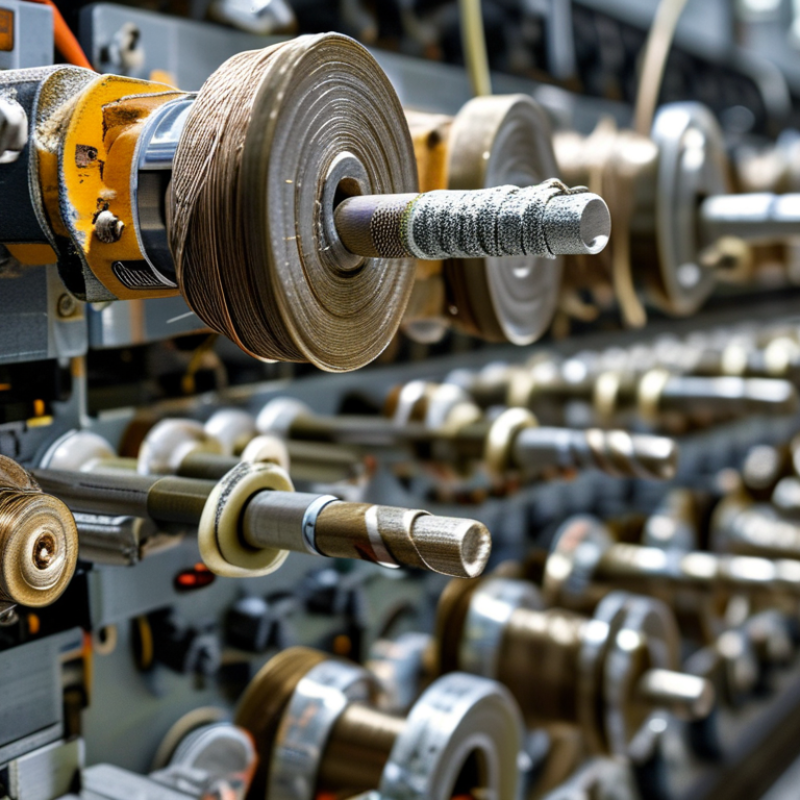
Understanding Vertical Pair Twisting Machine Types and Applications
How to Choose the Best Vertical Pair Twisting Machine
Understanding machine types and applications is more useful than comparing speed alone. Vertical pair twisting machines commonly use single-twist or double-twist systems. Single-twist designs suit smaller conductors and moderate production volumes. Double-twist systems can deliver higher output with fewer interruptions. Their vertical structure also saves floor space and supports clearer material paths.
The right type depends on the product. Insulated control wires may need gentle tension and accurate pair length. Flexible cables often require stronger take-up control and stable twisting under changing loads. Communication cables need consistent pitch, low surface damage, and reliable separation between pairs. Check the bobbin size, twist range, line speed, dancer response, and take-up capacity. Small details matter.
In practical testing, I would run the intended material before approving a machine. Watch the wire near the guide eye. Uneven movement can reveal poor alignment or unstable tension. Listen for sudden vibration. It may signal a mechanical issue. A clean sample is not enough; measure pitch across several meters and inspect insulation marks. Operators also need accessible controls and safe loading procedures. I have seen specifications look impressive while changeover remained slow. That weakness is easy to overlook. Machine selection should reflect real production habits, not only catalog figures.
| Machine Type | Typical Product Format | Common Application | Indicative Conductor or Cable Size | Typical Twist-Pitch Range | Indicative Line Speed | Main Advantages | Important Selection Considerations |
|---|---|---|---|---|---|---|---|
| Standard Vertical Pair Twisting Machine | One pair formed from two insulated conductors | Control cables, signal wires, low-voltage harnesses, and general-purpose paired conductors | Approximately 0.14–6.0 mm² conductor cross-sectional area, depending on insulation and tooling | Approximately 25–250 mm | Approximately 200–800 m/min | Balanced combination of flexibility, operating simplicity, and moderate production capacity | Confirm payoff capacity, dancer range, die size, and tension stability for the selected insulation diameter |
| Servo-Controlled Variable-Pitch Vertical Twister | Two insulated wires with electronically adjustable pitch | Data cables, instrumentation cables, sensor leads, and products requiring different pair pitches | Approximately 0.20–5.0 mm² conductor cross-sectional area | Approximately 15–300 mm | Approximately 300–1,000 m/min | Fast recipe changes, repeatable pitch control, and improved synchronization between payoff and take-up | Requires accurate encoder feedback, suitable servo sizing, and control software that supports the required pitch range |
| High-Speed Vertical Pair Twisting Machine | Small-diameter insulated wires or communication pairs | High-volume communication wiring, electronic equipment wiring, and compact signal assemblies | Approximately 0.08–2.5 mm² conductor cross-sectional area | Approximately 10–180 mm | Approximately 600–1,500 m/min | High output, reduced handling time, and efficient continuous production for stable product designs | Needs low-inertia payoffs, precise tension control, effective vibration management, and suitable take-up reels |
| Heavy-Duty Vertical Pair Twisting Machine | Large insulated conductors or robust paired cable elements | Industrial control cables, power-control assemblies, and mechanically demanding cable constructions | Approximately 2.5–16 mm² conductor cross-sectional area | Approximately 80–500 mm | Approximately 80–400 m/min | Higher pulling capacity, stronger payoff structure, and better suitability for heavier reels and larger diameters | Check maximum reel mass, motor torque, bending radius, braking capacity, and available floor loading |
| Back-Twist Vertical Pair Twisting Machine | Pair construction designed to reduce residual torsion in the finished product | Flexible cables, moving cable assemblies, robotics wiring, and products requiring improved dimensional stability | Approximately 0.25–10 mm² conductor cross-sectional area | Approximately 30–400 mm | Approximately 150–700 m/min | Can improve pair straightness, handling behavior, and resistance to unwanted untwisting after production | Verify the required back-twist ratio, line synchronization, conductor surface condition, and tension balance |
| Multi-Station Vertical Pair Twisting Line | Several independent pairs produced in parallel | Multi-pair communication cables, control cable components, and high-throughput harness production | Typically 2–12 insulated conductors per station, with product diameter selected by tooling | Approximately 20–300 mm | Approximately 250–1,000 m/min per station | Higher overall output, parallel production, and reduced changeover impact when multiple pair specifications are required | Compare station synchronization, total power demand, line footprint, maintenance access, and simultaneous recipe management |
| Compact Vertical Pair Twisting Machine | Small pairs and short-to-medium production runs | Laboratory samples, custom cable orders, prototyping, and small-batch industrial wiring | Approximately 0.05–2.5 mm² conductor cross-sectional area | Approximately 15–250 mm | Approximately 100–500 m/min | Smaller footprint, lower initial investment, and easier access for setup and product trials | Prioritize changeover time, reel compatibility, operator access, and the availability of required dies and guides |
| Automated Precision Vertical Twisting Line | Pair twisting integrated with automatic payoff, take-up, measurement, and inspection functions | Automotive wire assemblies, traceable industrial products, and repeatable high-volume manufacturing | Approximately 0.13–10 mm² conductor cross-sectional area, subject to the complete line configuration | Approximately 20–400 mm | Approximately 300–1,200 m/min | Improved process repeatability, production data collection, reduced manual intervention, and consistent product length | Evaluate automation compatibility, fault detection, data interfaces, recipe control, and maintenance skill requirements |
| Practical selection rule: Select the machine from the required conductor and finished-cable diameter first, then verify twist pitch, line speed, reel dimensions, tension range, automation level, and the applicable electrical, mechanical, and safety requirements. A higher rated speed is not automatically better if the product requires tight pitch accuracy or low tension. | |||||||