Blog

China Top Hydraulic Oil Filter Element Suppliers?

Choosing among China’s top Hydraulic Oil Filter Element suppliers requires more than comparing prices. It demands technical judgment, verified manufacturing evidence, and attention to real operating conditions. A filter that looks identical on a website may perform differently inside a hot excavator, injection-molding machine, or steel mill system.

Hydraulic filtration specialist Jim Fitch has stated, “The objective of oil analysis is to make better maintenance decisions.” This principle applies directly to supplier evaluation. Buyers should examine micron ratings, beta ratios, filter media, collapse pressure, sealing materials, and tested flow capacity. They should also request inspection reports, traceability records, sample approvals, and evidence of quality-control procedures. ISO 9001 certification can support credibility, but it does not replace product testing or application knowledge.

Field experience matters.

Reliable suppliers usually explain how their Hydraulic Oil Filter Element handles pressure spikes, cold starts, moisture, and abrasive particles. They should provide clear cross-reference data for OEM and aftermarket replacements. Export capability, packaging quality, lead times, and responsive technical support also affect long-term value. A low quotation may hide inconsistent media, weak end caps, or poor sealing.

No supplier is perfect. Even respected manufacturers may have gaps in documentation or communication. That is why this guide compares leading Chinese suppliers through a practical lens, not promotional claims alone. It considers engineering capability, production consistency, customization, testing, and customer feedback. Some conclusions may require further verification. Still, careful evaluation can reduce premature component failure and protect expensive hydraulic equipment.
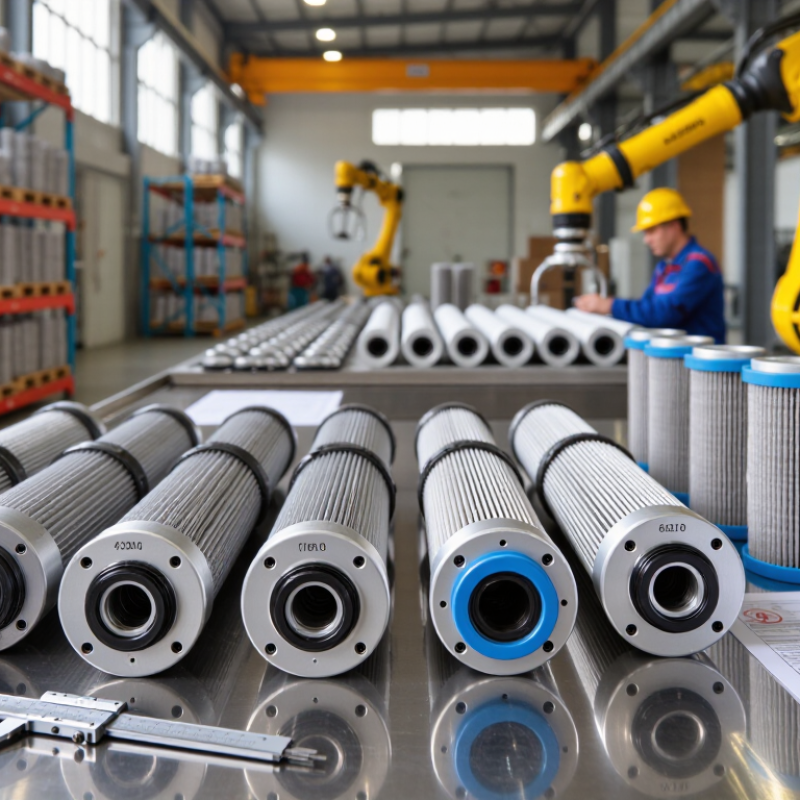
China Top Hydraulic Oil Filter Element Suppliers?

What Is a Hydraulic Oil Filter Element?

A hydraulic oil filter element is a replaceable component that cleans hydraulic fluid inside a filtration housing. It usually contains pleated synthetic fiber, cellulose, or wire mesh media. The pleats create more filtering area within a compact cylinder. As oil passes through the media, the element captures metal particles, dust, sludge, and other contaminants. Clean oil helps protect pumps, valves, cylinders, and precision control parts. It is not the filter housing.

The element’s performance depends on filtration rating, flow capacity, pressure resistance, and sealing quality. A suitable rating must match the hydraulic system, not simply appear finer. Excessive restriction can cause pressure loss and premature element collapse. In practical maintenance work, technicians often inspect dark oil, damaged seals, or abnormal pressure readings before replacement. Small details matter. A filter can look clean while holding harmful particles inside.

When comparing hydraulic oil filter element suppliers in China, request material specifications, dimensional drawings, pressure data, and contamination-control procedures. Reliable manufacturers should support batch traceability and consistent inspection records. An experienced buyer should also confirm compatibility with the original housing and operating temperature. One common mistake is choosing only by price. I have seen low-cost elements develop poor sealing after limited service. Supplier claims still require verification through sample testing, installation checks, and actual service records.

How Hydraulic Oil Filter Elements Work in Industrial Systems

Hydraulic oil filter elements protect pumps, valves, and actuators from damaging particles. They sit inside a filter housing along the oil circuit. As pressurized oil passes through the media, fibers or mesh capture metal dust, seal fragments, and other contaminants. Cleaner oil reduces abrasive wear inside tight valve clearances. The filter does not remove every problem. Water and chemical degradation may require separate controls.

Filter performance depends on pore structure, flow rate, and pressure difference. A dirt-loaded element creates higher resistance, which a pressure indicator can reveal. If the element becomes restricted, a bypass valve may open and let unfiltered oil continue moving. That prevents immediate system shutdown, but it increases risk. It should never become a routine operating condition. Technicians should inspect the indicator, examine the removed element, and record operating hours.

In industrial systems, installation details matter. The arrow must match the oil direction, and seals need clean, even seating. A small sealing fault can allow dirty oil to circulate around the media. During maintenance, technicians should cap open lines and prevent lint from entering the housing. I have seen new elements fail early because storage areas were damp or dusty. That lesson is easy to overlook. When evaluating hydraulic filter element suppliers, buyers should request material data, pressure ratings, test methods, and traceable quality records. Yet paperwork alone is not enough. Field results, compatible dimensions, and consistent batch performance deserve equal attention.

China Top Hydraulic Oil Filter Element Suppliers? - How Hydraulic Oil Filter Elements Work in Industrial Systems

Filter Element Type Typical Installation Point Common Filter Media Typical Ratings and Performance Primary Contaminants Removed How It Works in the System Key Selection Criteria
Suction-Strainer Element Inside or before the hydraulic reservoir pump suction line Stainless-steel wire mesh or perforated support material Commonly coarse protection in the approximate 60–150 µm range; pressure-drop control is critical Large particles, welding scale, hose debris and assembly contamination Prevents large debris from entering the pump while maintaining adequate inlet flow and reducing cavitation risk Open area, collapse strength, fluid compatibility and allowable suction pressure drop
Return-Line Filter Element Return line between actuators and the reservoir Pleated cellulose, glass-fiber or synthetic multilayer media Frequently selected around 3–25 µm; housing pressure rating is often lower than pressure-line service Wear particles and contaminants generated downstream of the pump Cleans the fluid before it re-enters the tank, helping control the reservoir contamination level Maximum return flow, bypass-valve setting, dirt-holding capacity and cold-start pressure drop
Pressure-Line Filter Element Downstream of the pump and upstream of sensitive valves or actuators High-strength glass fiber, synthetic or stainless-steel mesh media Common ratings range from about 1–10 µm; pressure ratings must match the circuit and surge conditions Fine abrasive particles that can damage proportional valves, servo valves and pump components Removes particles from pressurized oil before they reach precision components Continuous pressure, peak pressure, flow capacity, fatigue strength and verified filtration efficiency
Off-Line Kidney-Loop Element Separate filtration loop connected to the reservoir Fine glass fiber, synthetic depth media or water-absorbing media Often designed for low, steady flow and fine particle removal; exact rating depends on the auxiliary unit Fine particles, varnish precursors and, where specified, free or dissolved water Continuously conditions stored oil without interrupting the main hydraulic circuit Compatibility with the auxiliary pump, water-removal capability, service interval and target cleanliness code
Duplex or Change-Over Element Critical return or pressure-line applications requiring continuous operation Replaceable pleated cellulose, glass-fiber or synthetic media Two parallel filter chambers; one chamber can remain online while the other is serviced Process-generated particles and maintenance-related contamination Allows element replacement with minimal or no hydraulic shutdown when correctly operated Change-over design, seal reliability, switching procedure, bypass protection and service access
Water-Absorbing Element Return line or dedicated offline conditioning unit Cellulose or composite media formulated to capture free water Water-removal capacity is application-specific and must be confirmed by test data; particle rating varies by construction Free water and associated particulate contamination Absorbs or separates water to reduce corrosion, lubricant degradation and component wear Oil type, water concentration, temperature, flow rate and element saturation indicator
Technical selection notes: Absolute or tested filtration performance should be compared using ISO 16889 multi-pass test data where available. The beta ratio is calculated as the number of particles upstream divided by the number downstream at a specified particle size; for example, β10 = 1000 represents approximately 99.9% single-pass efficiency at the stated test condition. Nominal micron ratings are not directly equivalent to absolute ratings. Final selection should also verify oil viscosity, maximum flow, operating temperature, pressure and pressure spikes, seal compatibility, dirt-holding capacity, bypass-valve setting, and the cleanliness level required by the hydraulic components.

Key Standards for Evaluating Chinese Filter Element Suppliers

China Top Hydraulic Oil Filter Element Suppliers?

Key Standards for Evaluating Chinese Filter Element Suppliers

A capable Chinese filter element supplier should provide more than an attractive price. Ask for test records based on ISO 16889 multi-pass filtration testing. The report should show beta ratios, dirt-holding capacity, and pressure drop at a stated flow rate. ISO 2941 testing can help verify collapse and burst resistance. These details matter when a filter operates near a hydraulic pump, not on a showroom shelf.

Inspect the media, seal compound, end-cap bonding, and core material. Compatibility with mineral oil, water-glycol fluids, or biodegradable fluids must be documented. Request batch traceability from raw material to finished element. A reliable factory should identify production dates, inspection methods, and sampling levels. It should also measure cleanliness and confirm whether results match the required ISO 4406 target. Short answers are warning signs.

Sample approval should include dimensional checks, installation trials, and pressure-drop comparisons under real operating conditions. A supplier may pass a laboratory test yet perform poorly after repeated thermal cycles. That possibility deserves attention. One common mistake is trusting a certificate without checking its test scope, laboratory identity, and expiration date. Factory audits can reveal weak storage practices, inconsistent sealing, or hurried final inspections. No checklist is perfect. Keep records, challenge unclear claims, and compare several production batches before committing to regular supply.

Leading Types of China-Based Hydraulic Filter Element Manufacturers

China’s hydraulic filter element market includes several manufacturer types. Specialized filtration factories focus on replacement elements, using glass fiber, stainless steel mesh, or cellulose media. Their strength is process consistency and broad size coverage. They often support excavators, presses, agricultural equipment, and mobile machinery.

OEM-oriented manufacturers produce elements according to equipment drawings and flow requirements. They may adjust pleat height, sealing material, bypass-valve settings, and end-cap design. Custom machining suppliers can also develop unusual housings or threaded connections. However, a polished sample does not prove long service life. Buyers should request pressure-drop curves, collapse ratings, material certificates, and batch inspection records. Factory audits remain useful, even when documents look complete.

Tips: Compare performance, not only price. Ask for samples from the same production batch. Check whether the element fits without forced installation. Confirm media area, filtration accuracy, and operating temperature. A supplier with testing equipment can explain results clearly. Still, communication may fail across technical terms, and specifications can be misunderstood. Use drawings, photographs, and signed approval sheets. Small details matter. Calibration records should be current. When possible, test the element in a controlled hydraulic circuit before wider purchasing.

China-Based Hydraulic Filter Element Manufacturers: Common Filter Media Types

Hydraulic filter elements manufactured in China commonly use wire mesh, cellulose, glass fiber, and sintered metal media. The chart shows generalized particle-retention ranges commonly associated with these media types; the actual rating depends on filter construction, test method, fluid viscosity, and application requirements.

How to Choose the Right Supplier for Your Hydraulic System

Choosing a Chinese hydraulic oil filter element supplier requires more than comparing unit prices. Fit matters. Grand View Research’s 2024 estimate places the global hydraulic filters market above USD 4 billion, with mid-single-digit growth expected through 2030. This growth reflects replacement demand and stricter contamination control, not automatic quality. Check whether the supplier matches your housing, seal material, flow rate, and operating temperature. Ask for evidence.

A technically credible supplier should provide beta-ratio data under ISO 16889, cleanliness ratings under ISO 4406, and collapse-pressure results. Request the test method, sample size, and lot number. A certificate without traceability proves little. Review media compatibility with mineral oil, water-glycol fluids, or biodegradable oils before approving production. MarketsandMarkets’ 2023 analysis identifies filtration efficiency and industrial reliability as important purchasing factors in this sector.

Order pilot samples and inspect pleat depth, end-cap bonding, gasket hardness, and bypass-valve settings. Measure pressure drop at your real flow rate; catalog values can mislead. Compare rejected lots, response time, tooling ownership, and replacement lead times. The cheapest element may create expensive pump wear. Do not guess. An on-site or remote process audit should examine incoming fiber, adhesive control, curing, and final leak testing. One weakness remains: supplier claims often describe ideal samples, not monthly production. Require retained samples and a corrective-action process.

↑