Why Choose a Heavy Wall Seamless Pipe SCH80 Factory?
Choosing a Heavy wall seamless pipe SCH80 factory is a practical decision, not just a price comparison. Schedule 80 describes a wall-thickness series, but the actual dimensions vary with nominal pipe size. Buyers should confirm the applicable specification, material grade, outside diameter, and required length before comparing quotations. A clear inquiry helps prevent costly mismatches.
Good manufacturing starts with controlled processes and verifiable checks. Ask how the factory tracks heat numbers, measures wall thickness, and documents inspection results. Depending on the order and governing specification, testing may include dimensional inspection, ultrasonic examination, or hydrostatic testing. Request relevant test certificates and confirm that the stated results match the supplied pipe. Details matter.
Experience is visible in small things: consistent markings, clean bevels, and paperwork that follows each bundle. Still, a polished brochure is not proof of production capability. Review sample documents, clarify tolerances, and discuss packing, delivery, and inspection arrangements in writing. A factory may offer strong technical support yet have limits in stock, size range, or lead time. That deserves an honest conversation. The right supplier makes those limits clear and helps buyers assess them against project requirements. This introduction outlines the factors worth checking before selecting a factory for heavy-wall seamless pipe.
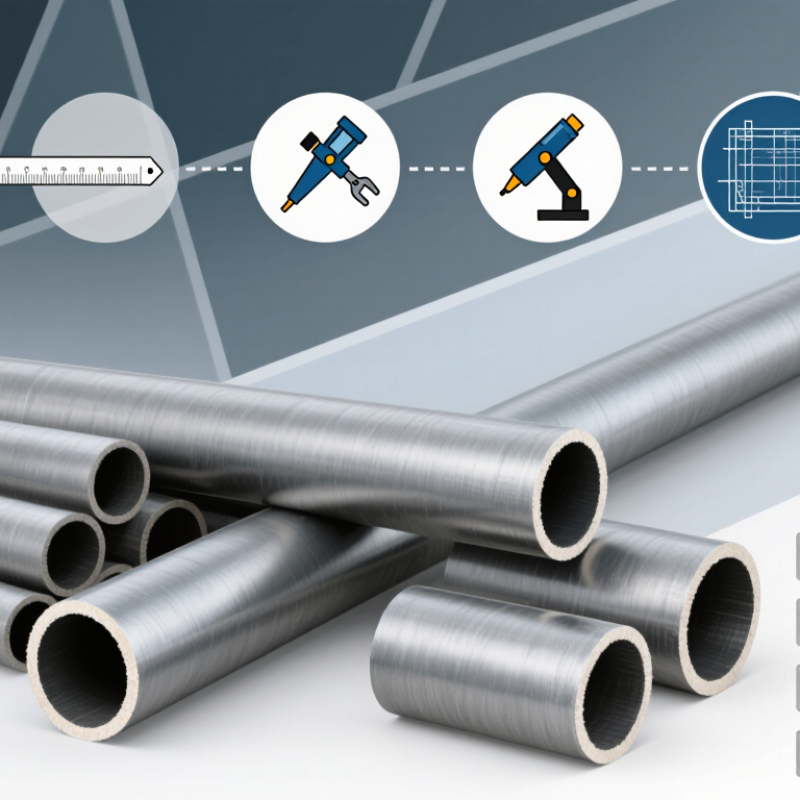
What Defines a Heavy Wall Seamless Pipe in SCH80?
A heavy wall seamless pipe is defined by its wall thickness relative to its nominal pipe size, not by one universal measurement. SCH80 is a standardized wall-thickness schedule, but its actual thickness changes with pipe size. ASME B36.10M’s dimensional tables list NPS 2 SCH80 pipe at 5.54 mm wall thickness, while NPS 8 measures 12.70 mm. These figures show why “heavy wall” needs a size reference. Still, calling every SCH80 pipe heavy wall can oversimplify a real design decision.
Seamless pipe has no longitudinal weld seam, but that alone does not establish its pressure capacity or suitability. Material grade, operating temperature, corrosion allowance, and manufacturing tolerances also matter. ASME B36.10M provides dimensional data; the applicable material specification and engineering calculations must guide selection. A capable factory should verify dimensions, trace material records, and provide inspection documentation. Ask how wall thickness is measured, especially when tolerances affect fit-up or machining. Small variations can matter.
Tips: Check the nominal size and wall thickness together. Compare the mill certificate with the purchase specification. And confirm the service conditions before ordering.
How SCH80 Wall Thickness Affects Pipe Performance
SCH80 wall thickness changes more than a pipe’s weight. It affects pressure capacity, bore size, and how the pipe handles demanding service. The exact wall dimension depends on nominal pipe size, so SCH80 does not mean one fixed thickness for every diameter. Check the applicable dimensional standard and the mill’s inspection records before comparing products.
A thicker wall can provide more material to resist internal pressure and mechanical wear, but it also reduces the inside diameter. That difference matters in a water line: a smaller bore may increase flow resistance, especially over long runs. During installation, the added weight can also call for sturdier supports and more careful handling. Small details count.
In factory selection, ask how wall thickness is measured and how seamless pipes are checked for dimensional consistency. Review material certificates and request inspection data for the actual size you need. SCH80 alone cannot confirm suitability; pressure, temperature, fluid, corrosion allowance, and connection design all matter. I have seen buyers focus on schedule and overlook bore size. It is an easy mistake, and sometimes the drawing needs another look.
How Seamless Pipes Are Manufactured and Tested
Why Choose a Heavy Wall Seamless Pipe SCH80 Factory?
A heavy wall seamless pipe begins with a solid steel billet. The billet is heated evenly, then pierced to create a hollow shell. Rotary rolling reduces its diameter and controls wall thickness. Further sizing improves roundness and surface condition. Heat matters. Poor temperature control can create uneven grain structure or hidden weakness.
For SCH80 production, engineers calculate wall thickness by pipe size, not by schedule number alone. This detail is often misunderstood. The pipe may receive normalizing, quenching, or tempering, depending on its grade and application. Samples are tested for tensile strength, yield strength, elongation, and hardness. Chemical analysis confirms the required material composition. Every result should match the purchase specification and applicable standard.
Inspection continues after production. Hydrostatic testing checks pressure resistance, while ultrasonic testing can detect internal discontinuities. Visual inspection finds scratches, laps, dents, and imperfect ends. Dimensional checks measure outside diameter, wall thickness, length, and straightness. Traceability links each pipe to its heat number and test records. Records matter. A reliable factory also calibrates instruments and separates nonconforming products.
No process is flawless. Small errors spread. Experienced inspectors review borderline results instead of hiding them. This is where practical judgment matters, especially with heavy walls and large diameters. A factory deserves consideration when its manufacturing controls, testing discipline, and documentation remain consistent from billet preparation to final marking.
Which Factory Capabilities Ensure Consistent Quality?
Why Choose a Heavy Wall Seamless Pipe SCH80 Factory?
Which Factory Capabilities Ensure Consistent Quality?
A reliable SCH80 factory controls the full process, from billet selection to final inspection. Seamless production requires stable heating, accurate piercing, and controlled sizing. ASME B36.10M-2022 defines pipe dimensions and wall thicknesses, including Schedule 80 specifications. The factory should verify outside diameter, wall thickness, ovality, and straightness on every production lot. Small errors can affect welding fit-up and pressure performance.
Material traceability is equally important. Each heat number should follow the pipe through cutting, heat treatment, testing, and packing. ASTM A106/A106M-2023 lists Grade B minimum tensile strength at 415 MPa and yield strength at 240 MPa. These figures are not enough alone. A dependable plant also provides chemical analysis, tensile results, hydrostatic testing, and non-destructive examination records. Ultrasonic testing can reveal internal discontinuities that visual checks may miss. ISO 9001-based procedures help, but certificates cannot replace real process discipline.
Tips: Ask for recent mill test certificates, calibration records, and sample inspection reports. Check whether the factory records furnace temperature continuously. Request traceability photos before shipment. Factory experience matters, yet even experienced teams can overlook a minor dimensional drift. Independent inspection is wise for critical service. 马会
Why Choose a Heavy Wall Seamless Pipe SCH 80 Factory?
A capable factory must control billet quality, seamless piercing, heat treatment, dimensional inspection, and traceability. The chart shows nominal SCH 80 wall thicknesses for selected pipe sizes according to ASME B36.10M reference dimensions.
Consistent production capability is essential because heavier wall thickness requires stable forming, controlled heat treatment, accurate sizing, and verified inspection records across different nominal pipe sizes.
Where Heavy Wall SCH80 Pipes Are Commonly Used
Heavy wall seamless SCH80 pipe is commonly selected for systems where pressure, temperature, and mechanical stress overlap. Its dimensions follow ASME B36.10M, but SCH80 does not represent one universal wall thickness. The actual thickness changes with nominal pipe size. This detail is often missed.
Oil and gas facilities use SCH80 seamless pipe in gathering lines, refinery units, and high-pressure process piping. The IEA’s Oil 2024 report projects global oil demand to reach about 105.4 million barrels per day by 2029. That continuing demand supports new and upgraded piping networks. Seamless construction can reduce concerns about longitudinal weld quality in demanding service, although it does not eliminate inspection needs. Engineers still review corrosion allowance, design temperature, fluid chemistry, and fatigue cycles.
Power stations also use heavy wall SCH80 pipe for boiler feedwater, steam, condensate, and auxiliary systems. The IEA Electricity 2024 report expects global electricity demand to grow by an average of about 3.4% annually through 2026. More generation capacity means more pressure-bearing piping around turbines and heat-recovery equipment. Chemical plants, offshore modules, and water-treatment facilities use it where compact routing meets elevated pressure. Tight spaces matter.
In factory practice, reliable production includes heat-number traceability, ultrasonic examination, hydrostatic testing, and dimensional checks. A thicker wall may improve durability, but it also adds weight, welding time, and cost. It is not automatically the best answer. Material grade, end connection, and service conditions must be verified before ordering.